Hospital Marketing & SEO
Indian Healthcare Marketing in 2026: Where the Field Is Heading Next
Vamshi Kantoju
Read more 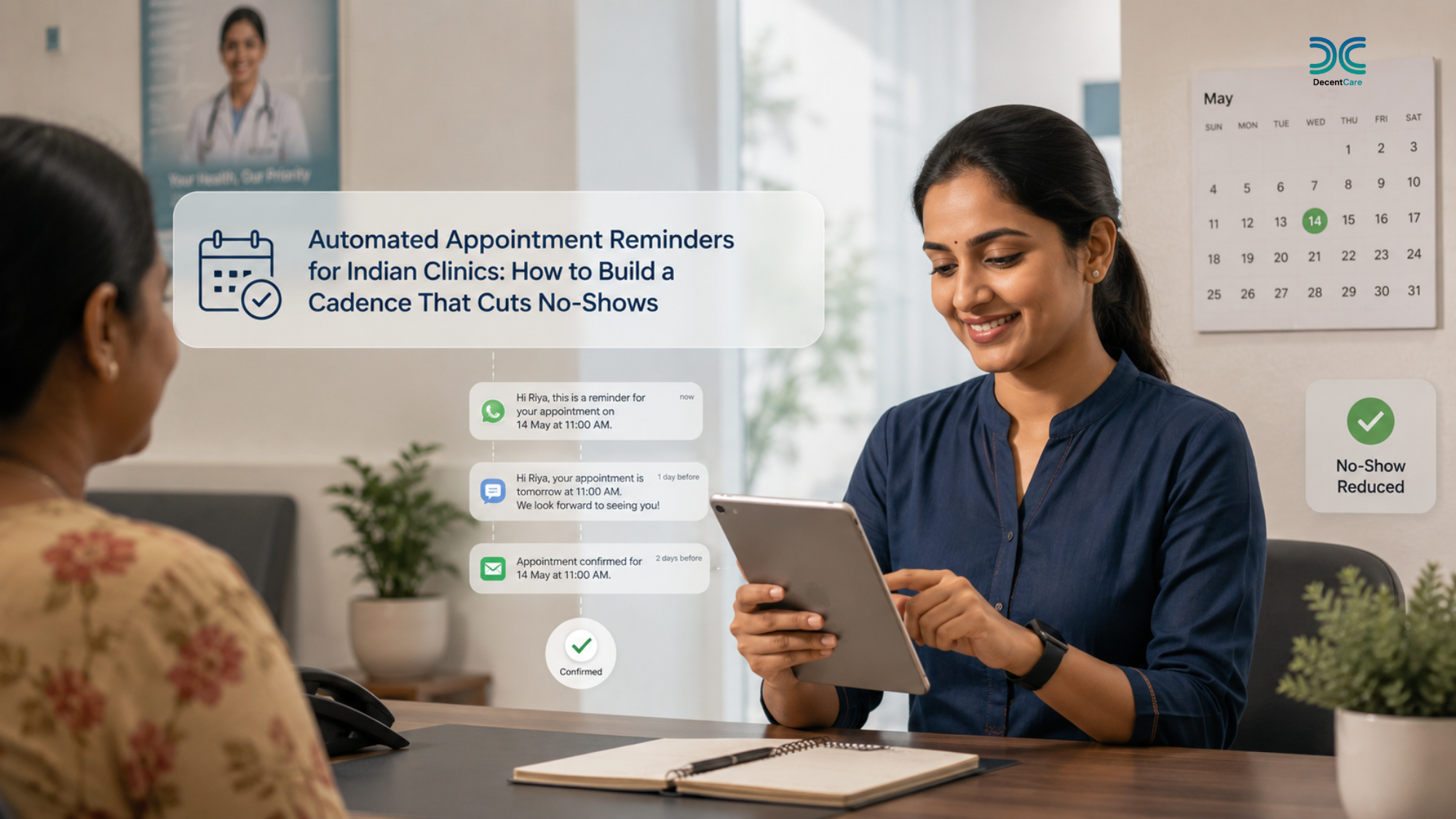


Automated appointment reminders are treated in most Indian clinics as a scheduling chore. Pick a time before the visit, send the same message to everyone, and hope more patients arrive. That is exactly why so many reminder programmes disappoint. A reminder cadence that works is not a schedule of messages. It is a behavioural response system: one that reads what each patient is signalling and adjusts to it. The clinics that reduce no-shows are not the ones sending the most reminders. They are the ones reading intent.
A cadence that works starts from the patient, not the calendar. A schedule of messages asks one question: how long before the visit should a reminder go out. A behavioural response system asks a different one: what is this particular patient doing, or not doing, and what should happen next. The first approach treats every booking as identical. The second treats a reminder as the opening move in a short conversation, where each reply, and each silence, changes what comes next. Most clinic reminder set-ups are schedules. That is the ceiling they keep hitting.
The distinction matters because the responsibility quietly shifts. A generic reminder hands the entire burden back to the patient: here is the date, remember it, sort out the rest. A behavioural cadence keeps part of that responsibility with the clinic. It notices when a patient has gone quiet, when a confirmation never came, when a high-value follow-up is drifting, and it acts on that instead of waiting.
The instinct when no-shows rise is to send more reminders. This usually makes the problem worse. When most messages a patient receives feel low value, the mind learns to filter all of them out, including the one that mattered. Sending a fourth and fifth identical nudge trains patients to ignore the clinic, and it pushes a share of them to opt out entirely. Reminder fatigue is a real ceiling, and volume is the fastest way to hit it.
The deeper issue is that a one-size cadence buries the patients who actually need attention. A reliable patient who always attends receives the same three messages as a first-time patient who booked three weeks ago and has not replied to anything. The signals are completely different, but the cadence treats them the same. A patient who has actively confirmed has demonstrated intent. A patient who has read the message and done nothing has demonstrated something else. Treating both as reminded is the mistake. An Indian tertiary-care outpatient study published in 2026 in the International Journal of Community Medicine and Public Health found forgetfulness and a lack of appointment reminders to be the two leading patient-stated reasons for missed appointments, though the same study noted that reminders alone had no statistically significant effect on whether patients actually attended, while forgetfulness did. The gap is real; the fix is not more noise. It is a reminder that reads intent, not one that ticks the clock.
A working cadence is short, two-way, and responsive. In practice, the effective structure for most Indian clinics is a confirmation at the moment of booking, a reminder a day or two before the visit that asks for an explicit confirm-or-reschedule reply, and a brief nudge on the day for patients who have not yet responded. Beyond that, additional messages add little and cost attention. A well-timed reminder prevents a meaningful share of missed appointments, and a second, well-placed one can help further; beyond that, additional messages typically add annoyance rather than attendance.
Three design choices separate a cadence that works from one that merely fires:
Channel matters in the Indian context, but it is not the whole answer. WhatsApp reminders are read and replied to more reliably than SMS or email for most Indian patients, which is why so many clinics have moved appointment confirmations and reminders to approved WhatsApp utility templates. The channel raises the odds the message is seen and acted on. It does not, on its own, make the cadence intelligent. A high open rate on a message that ignores the patient signal is still a schedule of messages.
A reminder cadence is only as good as what the clinic can see behind it. Most systems record status: booked, reminded, confirmed, arrived, missed. That is useful, and it is where a hospital information system or a clinic scheduling tool naturally stops. It records what happened. It does not read what the patient is signalling on the way there.
This is where a behavioural cadence needs something beyond a hospital or clinic CRM. A CRM chases the deal and logs the outcome. What it does not capture is intent: the difference between a patient who confirmed within minutes and one who has left three reminders unread, or a returning follow-up patient whose replies have slowed month on month. DecentCare is built for exactly this layer. OmniLens captures the behavioural signals a records system never stores. OmniJourney scores intent, predicts which patients are drifting towards a no-show, and recommends the next best action. OmniCare, the patient journey CRM, is where the team acts on it. The shift is from status tracking to intent-aware tracking: not just knowing an appointment is reminded, but knowing which reminded patients are actually at risk and treating them differently. Understanding the behavioral patient timeline behind each booking is what lets a cadence respond instead of repeat.
The most underused asset in a reminder programme is the response data it already generates. Each confirm, each reschedule, each silence is a small piece of evidence about how likely a patient is to attend, and how engaged they are with the clinic over time. A cadence that reads intent uses those signals twice: once to decide the next message for this appointment, and again to build a picture of the patient across visits.
That second use is where reminders stop being an operational cost and start becoming a growth input. A patient who has quietly stopped confirming is often a patient drifting away, and every missed signal is a patient a competitor gets. Reading the pattern early means the clinic can intervene with a call or a personal follow-up while the relationship is still warm, rather than discovering the loss only when the slot sits empty.
Reminders, consent, and the Indian clinic context
A working cadence has to be a compliant one. Under India Digital Personal Data Protection Act, 2023, a clinic is a data fiduciary, and patient contact data carries clear obligations around consent, purpose, and the right to withdraw. Appointment confirmations and reminders for a visit the patient has already booked are genuinely transactional, which is why they sit comfortably as WhatsApp utility templates rather than marketing messages. The discipline is to keep them that way: reminders that quietly turn into promotions break both trust and the rules.
Consent also reinforces the behavioural argument. A patient who can easily opt out, and who is not bombarded, stays reachable for the messages that matter. Frequency control is not just courtesy; it is what protects the deliverability of the reminder the clinic genuinely needs a patient to see.
The honest test of a cadence is not how many reminders went out. It is three numbers: the confirmation rate, the share of would-be no-shows recovered through rescheduling, and the no-show rate itself. A cadence that lifts confirmations and rescheduling while holding opt-outs flat is working. One that raises message volume without moving those numbers is theatre. The point is not any single headline figure. It is that the number moves when the cadence starts reading intent rather than counting messages.
What is an appointment reminder cadence?
An appointment reminder cadence is the sequence and timing of messages a clinic sends before a visit. A cadence that works is not a fixed schedule sent to everyone. It responds to each patient signal, confirming, reminding, and stopping based on how the patient replies, so the right patients get the right nudge at the right time.
How many appointment reminders should a clinic send?
For most clinics, a confirmation at booking, one reminder a day or two before, and a short day-of nudge for patients who have not replied is enough. Beyond two well-timed reminders the returns fall away sharply, and extra messages mainly cause reminder fatigue and opt-outs rather than better attendance.
Do WhatsApp reminders reduce no-shows in India?
WhatsApp reminders help because they are read and replied to more reliably than SMS or email for most Indian patients. But the channel only raises the odds the message is seen and acted on. The reduction in no-shows comes from the cadence design: asking for a reply, making rescheduling easy, and acting on which patients do not respond.
Why do patients ignore appointment reminders?
Patients ignore reminders when they receive too many, when the messages feel identical and impersonal, and when there is no easy way to act on them. When most messages feel low value, patients filter all of them out. Fewer, sharper, two-way reminders earn more attention than a high volume of one-way nudges.
What is the difference between reminders and reading patient intent?
A reminder tells a patient something. Reading intent means using the patient response, a fast confirm, a reschedule, or silence, as a signal about how likely a patient is to attend and how engaged they are over time. Reminders inform. Intent-aware cadences decide what to do next based on what a patient is signalling.
Are automated appointment reminders compliant under India data rules?
Reminders for an appointment a patient has already booked are transactional and generally sit as WhatsApp utility templates, not marketing. Under India Digital Personal Data Protection Act, 2023 a clinic is a data fiduciary, so consent, a clear purpose, and an easy opt-out are essential. Kept transactional and consented, automated reminders are compliant.
The clinics pulling ahead are not the ones with the loudest reminder programmes. They are the ones that treat every reminder as a question and every reply as an answer worth keeping. To see how a behavioural layer turns appointment reminders into a signal of patient intent, and intent into fewer empty slots, explore how DecentCare works. Understand your patients, grow your hospital.

A healthcare marketing professional with 6 years of experience in developing patient acquisition strategies, managing digital marketing for hospitals and clinics, and creating patient-focused content. Focused on helping healthcare organisations reach the right patients, improve patient engagement, and support sustainable growth through healthcare SEO, content marketing, and compliant digital campaigns.